Care for Cymbidium Orchids
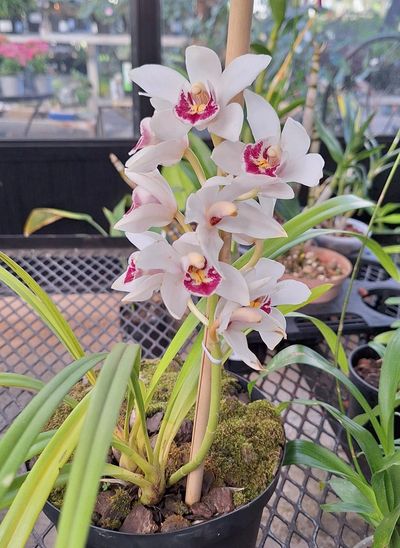
King of orchids
Popular orchids known for their long-lasting flowers and relatively easy-care requirements. Here's a comprehensive guide to help you care for your Cymbidiums:
Light
• Exposure: Cymbidiums require bright, indirect light. They can tolerate some direct
sunlight, especially in the morning o but avoid the harsh midday sun as it can scorch
the leaves.
• Location: Place them near a south-facing window with filtered light, or in a spot where
they receive plenty of bright, indirect light. They do well outside.
• Leave colour: bright green -perfect light, dark green too little light, yellow or red to
much light
Temperature
• Daytime: Cymbidiums prefer daytime temperatures between 24-29°C.
• Nighttime: Nighttime temperatures should be cooler, between10-15°C. This
temperature drop is crucial for flower spike initiation. No lower then 5°C.
• Seasonal Variation: They benefit from a significant temperature drop at night,
especially in the autumn, to stimulate flowering
Watering
• Frequency: Water Cymbidiums thoroughly when the potting mix is almost dry but not
completely dry. This typically means watering once a week during the growing season
and reducing to every two weeks in the dormant season.
• Method: Water thoroughly, allowing water to drain out of the pot to prevent root rot.
Ensure the pot has good drainage.
• With heavy rains move your plant to a covered area
Humidity
• Ideal Levels: Maintain humidity levels between 50-70%.
• Increasing Humidity: Use a humidity tray or a room humidifier if the air is too dry. Grouping plants together can also help increase humidity.
Fertilization
• Type: Use a balanced orchid fertilizer, such as a 20-20-20 or 30-10-10 mix, during the
growing season. Half strength.
• Frequency: Fertilize every two weeks during the growing season and reduce to once a
month during the dormant season
Potting Mix
• Composition: Use a well-draining orchid mix, typically composed of bark, perlite. This
allows for good aeration and prevents root rot.
• Repotting: Repot every 2-3 years or when the potting mix breaks down. Repot after
blooming.
• Use rocks to aid drainage and add weight.
Pruning and Maintenance
• Dead Flowers: Remove spent flowers to encourage new growth and prevent disease.
• Yellow Leaves: Trim off any yellow or dead leaves to keep the plant healthy.
• Pseudobulbs: Do not remove except if it comes away naturally or if rotten
Pests and Diseases
• Common Pests: Watch for common orchid pests like spider mites, aphids, and
mealybugs. Treat infestations promptly with Rosecare
• Diseases: Prevent fungal and bacterial diseases by ensuring good air circulation and
not overwatering.
Flowering
• Cycle: Cymbidiums typically bloom once a year, often in the late winter or early
spring.
• Stimulation: To encourage flowering, ensure they experience cooler nighttime
temperatures in the autumn.
• Add potassium: Will encourage flowering
Additional Tips
• Outdoor Placement: In mild climates, Cymbidiums can be placed outdoors in a
shaded area during the summer. Protect from snails and slugs
• Support: Use stakes to support flower spikes as they grow to prevent them from
bending or breaking.
• Beware cold drafts or sudden temperature changes it will cause bud blight.